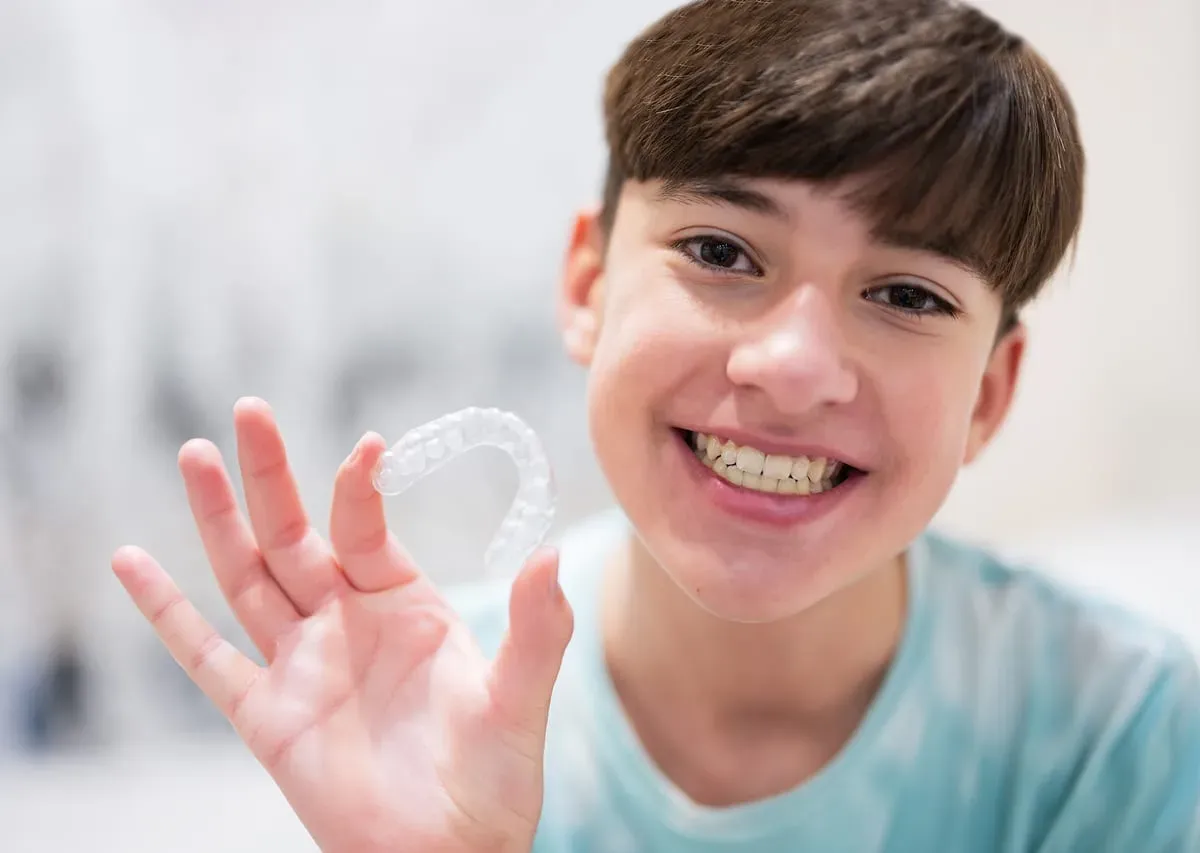
If you've spent years wishing your smile were a little straighter but couldn't stomach the idea of metal brackets and wires, you're not alone. A huge number of adults quietly live with crowding, gaps, or a bite that's never felt quite right, simply because traditional braces didn't fit their lifestyle, career, or budget of time. Invisalign changed that equation for millions of people, and it continues to be one of the most requested treatments we provide at our Phoenix practice.
This guide walks through how Invisalign actually works, who it's suited for, what the process looks like appointment by appointment, and the realistic expectations you should have around cost and timeline. Our goal is to give you enough real information that you can walk into a consultation feeling informed, not guessing.
Whether you're considering treatment for yourself or researching options for a teenager, understanding the mechanics behind clear aligners will help you make a confident, well-informed decision.
Invisalign uses a series of custom-made, clear plastic aligners that each apply a small, calculated amount of pressure to specific teeth. Instead of a single fixed appliance adjusted every few weeks like traditional braces, you progress through a sequence of trays, typically wearing each one for 7 to 10 days before moving to the next. Each tray is slightly different from the last, nudging your teeth incrementally closer to their final position.
The entire sequence is mapped out in advance using 3D digital scans and treatment-planning software. Before your first tray is ever manufactured, your dentist can show you a simulation of how your teeth are projected to move from start to finish. That level of planning is a major reason Invisalign has become so precise over the years; small adjustments can be made to the plan before you've even started, rather than discovered mid-treatment.
Small tooth-colored attachments, sometimes called "buttons," are occasionally bonded to certain teeth to give the aligner something to grip for more complex movements like rotations or vertical adjustments. These are discreet and removed once treatment concludes. For patients dealing with more involved bite issues, we sometimes combine Invisalign with other restorative work, which is why a thorough exam matters before any plan is finalized.
Invisalign handles a wider range of cases today than it did a decade ago, but it's still not automatically the right fit for every bite. It tends to work extremely well for mild to moderate crowding, spacing between teeth, and many bite issues including certain overbites, underbites, and crossbites. The technology has matured significantly, and many cases that once required traditional metal brackets can now be managed with aligners alone.
That said, severe skeletal discrepancies, significant rotations on certain tooth types, or cases requiring major vertical tooth movement may still benefit more from traditional braces or a combination approach. This is exactly why an in-person evaluation matters more than a quiz on a website. During a consultation, we review your bite, take digital scans, and discuss your specific goals before recommending whether Invisalign, another orthodontic option, or a combined plan involving porcelain veneers or bonding makes the most sense for your smile.
Your first visit is mostly diagnostic. We examine your teeth and gums, take digital images, and evaluate your bite to confirm Invisalign is the right path. If you have active decay or gum inflammation, we usually recommend addressing that first through a professional cleaning and periodontal evaluation, since moving teeth with untreated gum disease can complicate results.
Once you're cleared to start, we capture a detailed digital scan of your mouth instead of the old-style goopy impressions. That scan gets sent off to generate your custom aligner series along with a projected treatment timeline. You'll typically pick up several sets of trays at once and return to the office roughly every 6 to 8 weeks so we can check progress, verify the teeth are tracking as planned, and hand you the next batch.
Near the end of active treatment, we often use refinement trays, which is a small additional round of aligners that fine-tunes minor details before finalizing your result. Once your teeth reach their target position, you'll transition to a retainer, which you'll need to wear according to our instructions to keep your new alignment stable long-term.
One of the biggest adjustments isn't physical discomfort but habit. Aligners should be worn 20 to 22 hours a day, which means they come out only for eating, drinking anything besides water, and brushing. Patients who struggle with results usually aren't wearing their trays consistently enough, so building a reliable routine matters just as much as the aligner design itself.
Most people notice a slight lisp for the first day or two with each new set as their tongue adjusts, and this typically resolves quickly. Mild pressure or tightness when switching trays is normal and signals that the aligner is doing its job; it generally eases within a day or so. If you ever experience sharp pain, a cracked tray, or an attachment that's come loose, it's worth having it checked rather than waiting until your next scheduled visit.
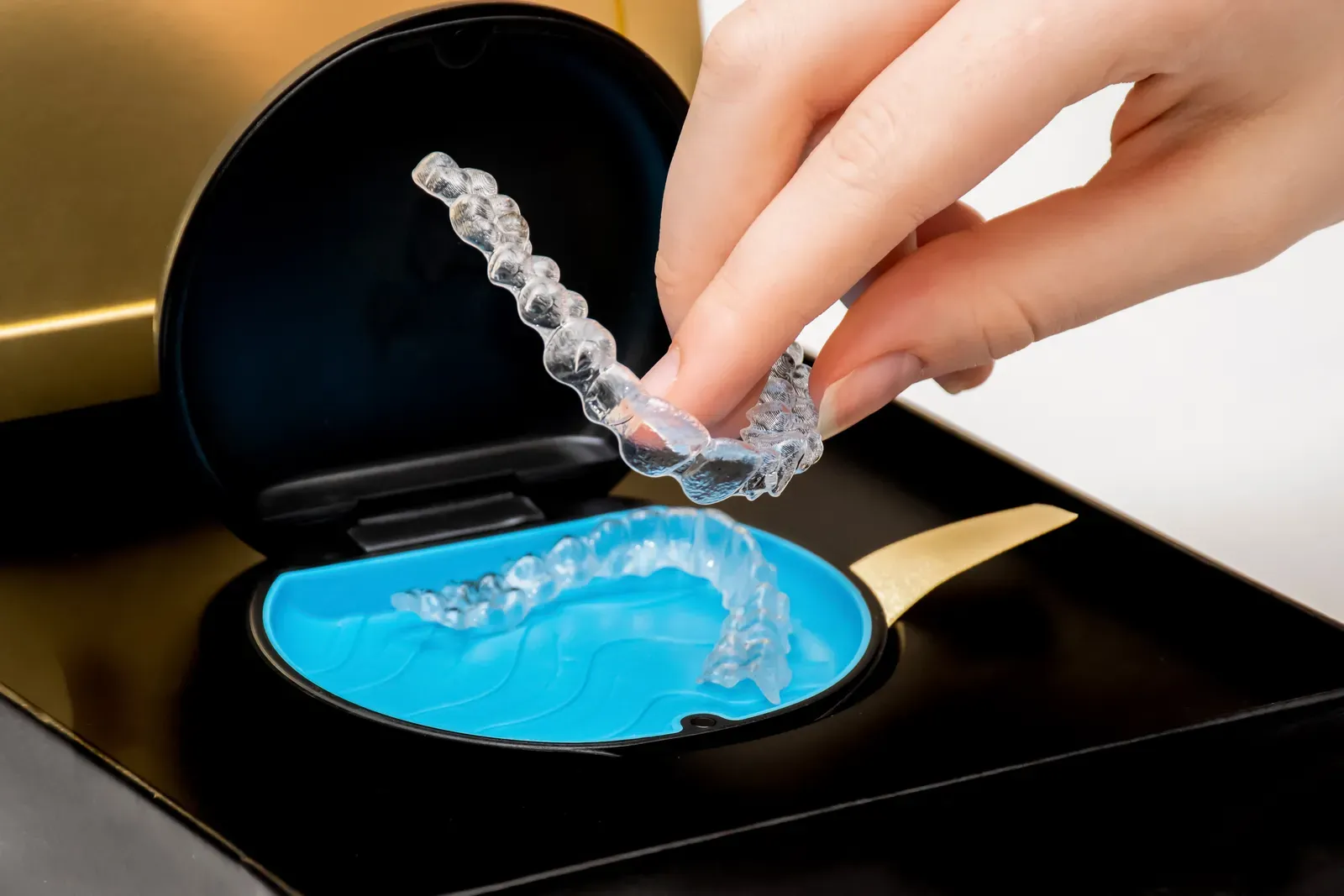
Hygiene is actually simpler with aligners than with brackets, but it still requires discipline. Trays should be rinsed and brushed gently each time they come out, and you should never eat with them in, since sugars and acids get trapped against your teeth for hours otherwise. Keeping up with regular dental visits throughout treatment ensures nothing is missed while your bite is shifting.
Treatment length depends heavily on the complexity of your case. Minor crowding or spacing might resolve in as little as 4 to 6 months, while more involved bite corrections can take 12 to 18 months or occasionally longer. This is one reason we're cautious about quoting a timeline before we've actually examined your teeth; generic estimates found online rarely account for your specific bite mechanics.
Cost is similarly case-dependent. Pricing is influenced by how many aligner trays your plan requires, whether refinements are needed, and whether any additional dental work is part of the overall treatment plan. During your consultation, we walk through the full estimate so there are no surprises, and we discuss financing or insurance options that may apply to orthodontic coverage.
It's also worth noting that straightening your teeth is rarely just about appearance. Teeth that fit together properly are easier to clean, distribute biting force more evenly, and are less prone to the chipping and wear that uneven bites tend to cause over the years. In that sense, Invisalign functions as both a cosmetic improvement and a long-term investment in oral health, pairing well with other services like straighter smile planning for patients who want a comprehensive approach.
Finishing your last tray is a genuine milestone, but it isn't the finish line for keeping that smile. Teeth naturally want to drift back toward their original positions over time, a process called relapse. A retainer, whether removable or a thin fixed wire bonded behind your front teeth, is what prevents months of progress from slowly reversing.
Most patients wear retainers nightly for the first several months, then gradually reduce to a few nights a week long-term under their dentist's guidance. Skipping this step is one of the most common regrets we hear about from patients who straightened their teeth years earlier through another provider and didn't keep up with retention. If you're ever unsure whether your retainer still fits properly, it's worth a quick check rather than assuming everything is fine.
Once your alignment is stable, many patients also take the opportunity to address any remaining cosmetic goals, whether that's teeth whitening to brighten a newly straightened smile or minor bonding to refine tooth shape. Straight, well-maintained teeth give cosmetic treatments a cleaner, more predictable result.
Most patients describe mild pressure for the first day or two after switching to a new tray, which tends to be less intense and shorter-lived than the soreness associated with metal brace adjustments. There's also no wire or bracket irritation against your cheeks and lips to worry about.
You can, but only after removing the trays. Drinking anything besides plain water while aligners are in can stain or warp the plastic and introduce sugars or acids that get trapped against your teeth, so it's best to take them out first.
Contact our office as soon as possible. Depending on where you are in your treatment, we may have you move temporarily to your previous tray, advance early to the next one, or order a replacement so your progress doesn't stall.
No. While it noticeably improves the appearance of your smile, it also corrects functional issues like uneven bite pressure, difficulty cleaning crowded teeth, and abnormal wear patterns that can lead to chipped or worn enamel over time.
Long-term retainer wear, even just a few nights a week, is generally recommended indefinitely because teeth can shift gradually throughout life regardless of past orthodontic treatment. Think of it as ongoing maintenance rather than a temporary step.
Invisalign has given adults and teens a genuinely practical way to correct crowding, gaps, and bite problems without rearranging daily life around metal brackets. The technology is more precise than it was years ago, the process is predictable when you follow the plan, and the results tend to hold up well when retention is taken seriously afterward.
None of that replaces a hands-on evaluation, though. Every bite is different, and the only way to know your realistic timeline and plan is to have your teeth examined by someone who can map it out specifically for you. If you've been considering straighter teeth for a while, a conversation with our team is a reasonable next step toward finally doing something about it.
Interested in the topics discussed in this guide? Explore our specialized treatments and services.
 Service
 Service
Ready When You Are
Book your visit with Clear Sky Dental Care and experience gentle, modern dentistry designed around your comfort and your schedule.


 602-352-0033