

 (602) 352-0033
Crooked or crowded teeth are one of the most common concerns patients bring up in our Phoenix office, and for good reason. A smile that doesn't sit quite right can affect how you chew, how you clean your teeth, and how confident you feel talking to a new client or showing up in family photos. The good news is that straightening treatment today looks nothing like it did a generation ago.
Modern orthodontic options move far faster, feel far more comfortable, and in many cases are barely noticeable to the people around you. Whether you're dealing with a slight overlap between your front teeth, gaps that have opened up over the years, or a bite that never quite aligned, there's likely a straightening approach that fits your life without upending it.
This guide walks through how our Straighter Smile service works, what to expect at each stage, and how to figure out whether now is the right time to start. We'll also cover the practical questions patients ask most often-timeline, cost, comfort, and what happens after your teeth are finally where you want them.
Why Straight Teeth Matter Beyond Appearance
It's easy to think of teeth straightening as a cosmetic upgrade, and visually, it is a significant one. But the bigger story is what happens below the surface. Teeth that overlap or sit too close together create tight spaces where a toothbrush and floss simply can't reach effectively. Over months and years, plaque builds up in those hidden corners, raising your risk of cavities and gum inflammation in spots you might not even notice until a checkup.
Misalignment also affects how your bite comes together. When teeth don't meet evenly, certain teeth absorb more chewing force than they were designed for. Over time, this can lead to uneven enamel wear, chipped edges, and even jaw discomfort or headaches tied to muscle strain. Correcting alignment spreads that pressure out evenly, which protects your natural teeth for the long run rather than just making them look better in photos.
There's also a practical maintenance benefit. Patients who complete straightening treatment often tell us that cleaning their teeth suddenly feels easier and faster. That's not a small thing-easier home care means better long-term outcomes from the routine cleanings and preventive visits you're already scheduling twice a year.
How Our Straighter Smile Treatment Works
Our Straighter Smile service begins with a thorough evaluation of your bite, tooth position, and jaw alignment, often supported by digital imaging that lets us map exactly how your teeth need to move. From there, we build a step-by-step plan that's specific to your mouth-not a generic template. This planning stage matters because it determines how predictable and comfortable the rest of treatment will be.
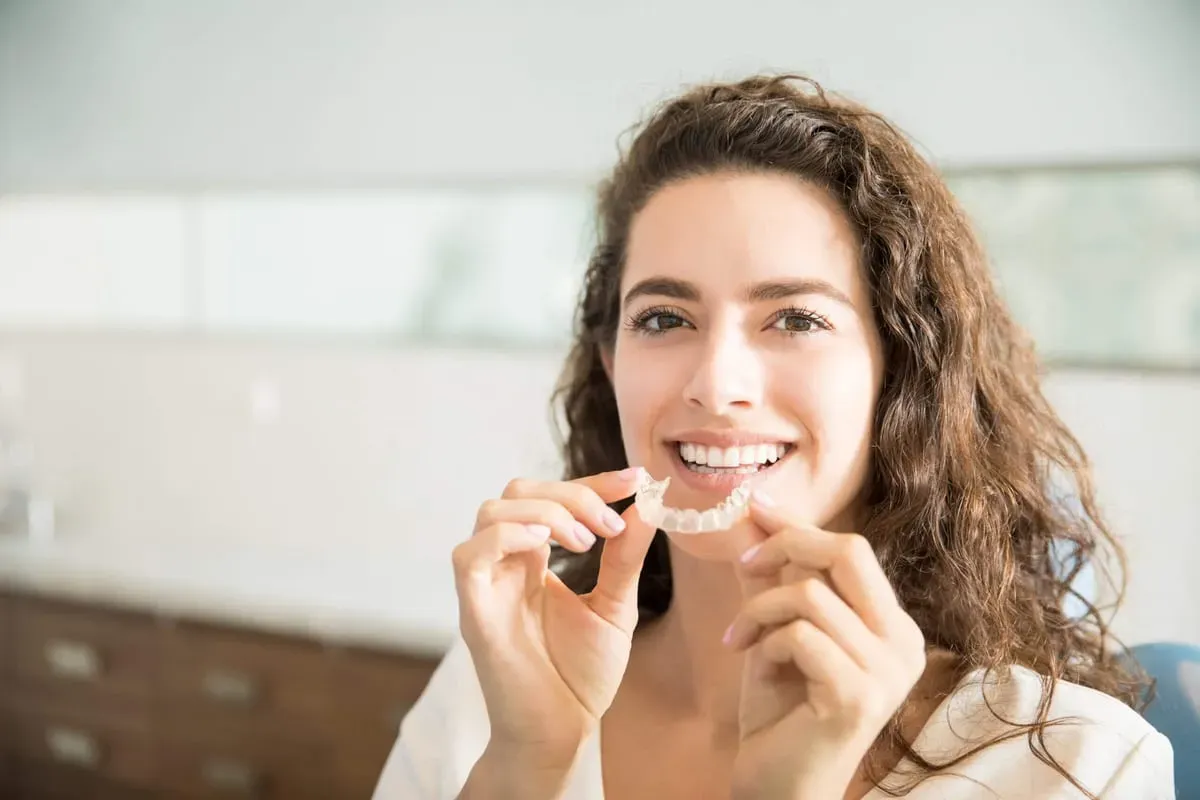
For most adult and teen patients, treatment uses a series of clear, custom-fitted aligners that gradually shift teeth into their correct position. Each set is worn for one to two weeks before moving to the next in the series, with small, incremental adjustments built into each stage. Because the aligners are clear and removable, you can eat normally, brush and floss without extra equipment getting in the way, and remove them for important meetings or events.
- Digital bite assessment: we examine how your teeth currently fit together and identify the specific movements needed to correct it.
- Custom aligner series: a sequence of clear trays is fabricated to match your personal treatment plan, stage by stage.
- Progress check-ins: scheduled visits let us confirm your teeth are tracking correctly and make adjustments if needed.
- Retention planning: once your active movement phase ends, we fit you with a retainer to protect your new alignment.
For patients whose alignment needs are more complex, we sometimes recommend pairing straightening with other restorative work, such as dental bonding to refine tooth shape once spacing is corrected, or a conversation about Invisalign as an alternative aligner system depending on your case. We'll walk you through the comparison so you understand exactly why one path is recommended over another.
Are You a Good Candidate for Teeth Straightening?
One of the biggest misconceptions we hear in our Phoenix office is that straightening treatment is only for teenagers. In reality, a large share of our Straighter Smile patients are adults-some in their 30s, 40s, or well beyond-who either never had orthodontic treatment earlier in life or whose teeth have shifted again with age. Teeth continue to move throughout adulthood, so mild crowding that wasn't a problem at 20 can become noticeable by 40.
Good candidates generally have healthy gums and a stable bite foundation, with misalignment limited to tooth position rather than significant jaw structure issues. During your consultation, we check for active decay or gum disease first, since those need to be addressed before any tooth movement begins. If you have missing teeth or significant bone loss, we may discuss how straightening interacts with options like dental implants to make sure both treatments work together rather than in conflict.
Common Concerns That Respond Well to Treatment
Mild to moderate crowding, visible gaps between front teeth, a slightly rotated tooth, and minor bite discrepancies are all cases we see regularly and correct successfully. More complex skeletal bite issues sometimes need a combined approach, which is why an honest evaluation up front saves time and sets realistic expectations before you commit to a plan.
How Long It Takes and What It Feels Like
Treatment length depends on how much movement your teeth need. Minor cosmetic corrections-closing a small gap or nudging one crowded tooth-can sometimes finish in as little as four to six months. More involved cases addressing crowding across the full arch or correcting bite alignment typically take twelve to eighteen months. We'll give you a realistic estimate at your consultation rather than a generic average, since every mouth moves at its own pace.
As for comfort, most patients describe a feeling of mild pressure for the first day or two after switching to a new aligner in the series, similar to the sensation of biting into something slightly firm. It typically fades within 48 hours as your teeth adjust. This is a sign the treatment is working rather than a cause for concern, and it's considerably milder than what patients historically experienced with traditional metal braces.
One advantage worth highlighting is how little aligner treatment interferes with daily routines. You won't need to avoid sticky or chewy foods the way you would with fixed braces, and there are no brackets or wires that can irritate your cheeks. You simply remove the aligner to eat, brush your teeth, and put it back in-consistency with wear time is really the only discipline required to stay on schedule.
Caring for Your Teeth During Treatment
Because your aligners are removable, keeping both your teeth and the trays clean is entirely in your hands. Brush and floss after meals before reinserting your aligners, since trapping food particles against your teeth for hours can increase the risk of cavities even faster than usual. Rinse your aligners with lukewarm water each time you remove them, and avoid hot water, which can warp the plastic and throw off the fit.
We also recommend sticking closely to your scheduled check-ins throughout treatment. These visits aren't just a formality-they let us verify your teeth are tracking as planned and catch any small issues, like an aligner not seating fully, before they slow your progress. If you notice persistent soreness, a tray that won't seat properly, or any sharp edges on an aligner, call our office rather than waiting for your next scheduled appointment.
Patients already managing a busy Phoenix schedule often appreciate that straightening treatment doesn't require frequent in-office adjustments the way traditional braces do. Most progress happens at home between visits, with our team simply confirming everything is on track. If gum sensitivity or inflammation develops during treatment, we may recommend a closer look through periodontal therapy to keep your gums healthy while your teeth continue to shift.
Keeping Your Results After Treatment Ends
Finishing active treatment is a milestone, but it isn't the final step. Teeth have a natural tendency to drift back toward their original position once the force that moved them is removed-a process orthodontists call relapse. That's why we fit every Straighter Smile patient with a custom retainer immediately after treatment and set a wear schedule designed to lock in your new alignment permanently.
Typically, retainers are worn full-time for the first few months and then scaled back to nighttime wear only, often continuing indefinitely at a reduced frequency. It sounds like a long commitment, but in practice it becomes a quick, unremarkable part of your bedtime routine, no different than brushing your teeth. Skipping it, on the other hand, is the single most common reason patients see their teeth shift back over time.
Once your smile is aligned, many patients choose to take the next step with a brightening treatment. Straight teeth tend to show off whitening results more evenly, since the surfaces are easier to reach and treat uniformly. If that's on your mind, our team can talk you through teeth whitening as a natural follow-up once your alignment is complete.
Key Takeaways
- Straight teeth are easier to clean and distribute bite force more evenly, protecting enamel and gums long-term.
- Our Straighter Smile treatment uses a custom series of clear aligners built around a digital plan specific to your bite.
- Most adult patients are good candidates, even if misalignment developed later in life rather than in childhood.
- Mild cases can finish in four to six months, while full-arch corrections often take twelve to eighteen months.
- Wearing your retainer as directed after treatment is essential to prevent your teeth from shifting back.
Frequently Asked Questions
Will people be able to tell I'm wearing aligners?
Clear aligners are made from transparent, medical-grade plastic that fits tightly over your teeth, making them difficult to notice in everyday conversation or photos. Most patients find that coworkers and friends don't even realize they're straightening their teeth unless they mention it themselves.
Does teeth straightening hurt?
You may feel pressure or mild soreness for a day or two after starting each new aligner, but it's generally much more tolerable than the tightening associated with traditional braces. Over-the-counter pain relief is rarely needed beyond the first couple of days of a new stage.
How many hours a day do I need to wear my aligners?
For treatment to stay on schedule, aligners should be worn 20 to 22 hours a day, removing them only to eat, drink anything other than water, and brush or floss. Wearing them less consistently extends your overall treatment time and can affect how predictably your teeth move.
Can I straighten my teeth if I already have crowns or fillings?
In most cases, yes. Existing dental work doesn't automatically rule out aligner treatment, though it does factor into how we plan your tooth movement. We'll review any previous restorations during your consultation to confirm your plan accounts for them properly.
What happens if I lose or damage an aligner mid-treatment?
Call our office right away rather than skipping ahead to the next tray in your series. Depending on how far along you are, we may have you continue wearing your previous aligner temporarily or have a replacement made so your treatment stays accurately on track.
Finding the Right Time to Start
There's rarely a perfect moment to begin straightening your teeth, but there is a best moment relative to your current oral health. If you've been putting off a crooked tooth or a bite that doesn't quite feel right, a short consultation is usually enough to tell you exactly what treatment would involve and roughly how long it would take for your specific case.
Straight teeth aren't just about how your smile looks in a photo. They're easier to keep clean, less prone to uneven wear, and more comfortable to bite and chew with over the years ahead. If you've been considering it, our team can walk you through what a realistic plan looks like for your mouth and your schedule here in Phoenix.