

 602-352-0033
A brighter smile has a funny way of changing how people feel about themselves. Whether it's a first date, a job interview, or simply looking in the mirror before heading out the door, the color of our teeth carries more weight than most of us realize. It's no surprise, then, that teeth whitening remains one of the most requested cosmetic dental treatments year after year - and one of the most misunderstood.
Between drugstore strips, charcoal powders, whitening toothpaste, and professional in-office treatments, patients are bombarded with options and promises. Some work well. Some barely make a difference. And a few, if used incorrectly, can actually damage your enamel or irritate your gums. Understanding what really happens when teeth get whiter - and why they get stained in the first place - makes it much easier to choose a method that's both effective and safe.
In this guide, the team at Clear Sky Dental Care breaks down how teeth whitening actually works, what causes discoloration, how to choose between professional and at-home options, and how to protect your results once you've achieved that brighter smile.
Why Do Teeth Discolor in the First Place?
Before choosing a whitening method, it helps to understand what you're actually treating. Tooth discoloration generally falls into two categories: extrinsic staining, which affects the outer enamel layer, and intrinsic staining, which occurs deeper within the tooth structure. Extrinsic stains are usually caused by everyday habits - coffee, tea, red wine, tobacco, and pigmented foods all leave behind compounds called chromogens that cling to the porous surface of enamel over time.
Intrinsic discoloration is a different story. It can result from certain medications taken during childhood (like tetracycline), excessive fluoride exposure while teeth were developing, trauma to a tooth, or simply the natural aging process, which thins enamel and allows the yellower dentin underneath to show through more prominently. Genetics also play a role - some people are simply born with naturally whiter or more translucent enamel than others.
Knowing which type of staining you're dealing with matters because not all discoloration responds the same way to whitening treatments. Extrinsic stains typically lift easily with standard bleaching agents, while intrinsic stains - especially those caused by medication or trauma - may require more advanced cosmetic approaches like veneers or bonding to achieve a truly even result. A dental exam is the best way to know which category applies to you.
How Does Teeth Whitening Actually Work?
Nearly all teeth whitening products, professional or otherwise, rely on the same basic chemistry: a peroxide-based bleaching agent, usually hydrogen peroxide or carbamide peroxide. When applied to the tooth surface, these compounds break down into oxygen molecules that penetrate the enamel and interact with the discolored compounds trapped inside. This oxidation process breaks apart the larger, darker pigment molecules into smaller, less visible ones, effectively lightening the tooth from within rather than simply scrubbing away surface stains.
This is an important distinction many patients miss: whitening toothpaste and polishing treatments primarily remove surface stains through mild abrasion, while true bleaching treatments chemically alter the color of the tooth itself. That's why a whitening toothpaste might make your smile look slightly cleaner, but it will never produce the dramatic transformation that a peroxide-based gel can.
The concentration of the bleaching agent, the amount of time it stays in contact with the tooth, and whether heat or light is used to accelerate the reaction all influence how quickly and dramatically the whitening effect shows up. Professional treatments use higher concentrations under controlled, supervised conditions, which is part of why they tend to produce faster, more noticeable results than store-bought alternatives.
Professional Whitening vs. At-Home Kits
Walk down any pharmacy aisle and you'll find a wall of whitening strips, trays, pens, and rinses promising a Hollywood smile in days. These products can offer modest improvements, but they come with real limitations. Over-the-counter kits use lower concentrations of peroxide for safety reasons, since they aren't applied under professional supervision. That means results are typically slower, less dramatic, and harder to control evenly across all your teeth.
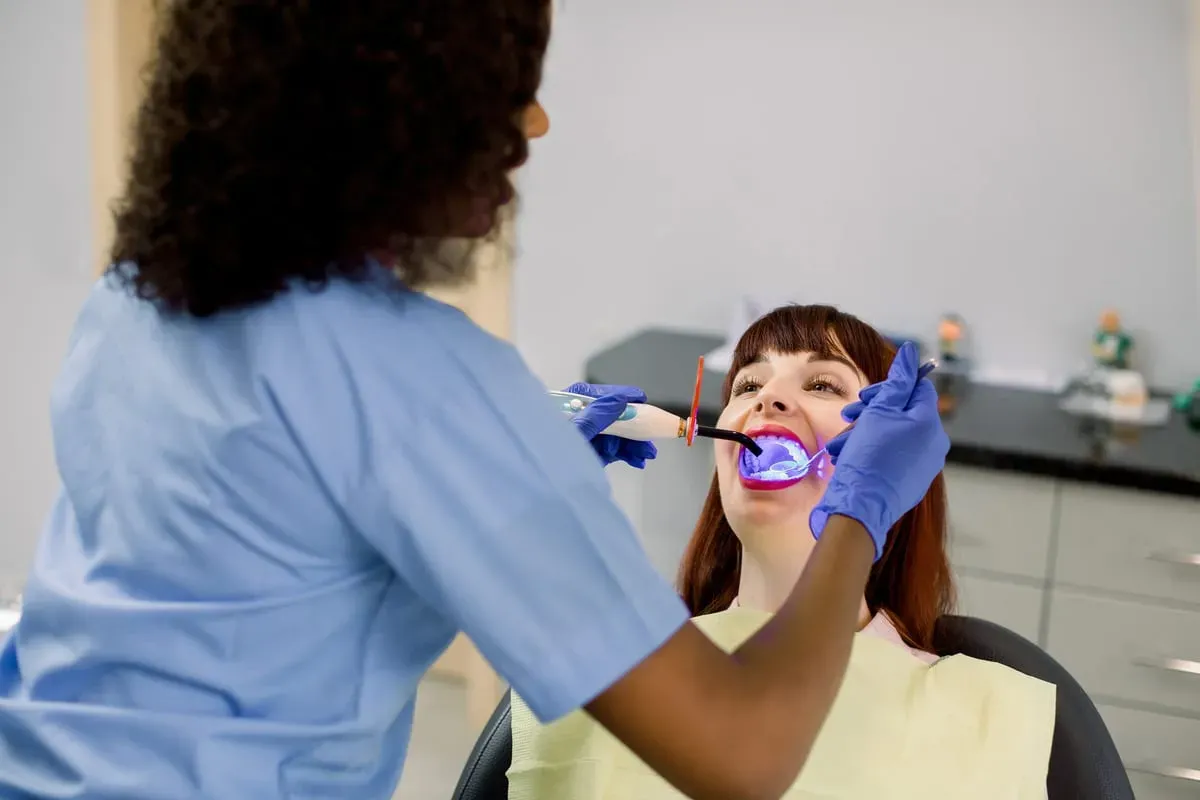
In-office professional whitening, on the other hand, allows your dentist to apply a much stronger bleaching gel while carefully protecting your gums and soft tissue from irritation. Many in-office systems also use a curing light or laser to accelerate the chemical reaction, which is why patients often see several shades of improvement in a single visit rather than waiting weeks. Dentists can also customize the treatment to your specific staining pattern and sensitivity level, something a one-size-fits-all drugstore kit simply cannot do.
A popular middle-ground option is professionally dispensed take-home whitening trays. These are custom-fitted to your teeth for even gel distribution and use a stronger concentration than store-bought kits, but at a pace that's gentler than in-office treatment. Many patients appreciate the flexibility of whitening on their own schedule while still getting dentist-grade results.
- In-office whitening - the fastest, most controlled option, ideal before major events or when you want visible results in one appointment.
- Custom take-home trays - dentist-supplied gel and trays for gradual, even whitening at your own pace.
- Over-the-counter strips and gels - convenient and affordable, but slower and less predictable for stubborn stains.
- Whitening toothpaste - helpful for maintenance and light surface stains, but not a substitute for true bleaching.
Who Is a Good Candidate for Whitening?
Most people with healthy teeth and gums are reasonable candidates for cosmetic whitening, but a dental checkup beforehand is important. Whitening is designed to work on natural enamel - it won't change the color of crowns, veneers, fillings, or bonding, which means patients with visible dental restorations in their smile line may end up with a mismatched appearance if they whiten only their natural teeth.
It's also essential to address any underlying oral health issues first. Whitening gel applied over untreated cavities, cracks, or gum disease can cause significant discomfort and, in some cases, worsen the underlying problem. That's why a professional exam is always the recommended first step - not just to determine your candidacy, but to make sure your teeth are healthy enough to handle the treatment comfortably.
Special Considerations
Pregnant or breastfeeding patients are generally advised to postpone whitening treatments as a precaution, even though there's no strong evidence of harm. Patients with intrinsic staining from medication exposure, deep enamel fractures, or very thin enamel may need to discuss realistic expectations with their dentist, since these cases sometimes respond better to veneers or bonding than to bleaching alone.
How Long Do Results Usually Last?
Whitening results are not permanent, and how long they last depends heavily on your habits after treatment. On average, professional whitening results can last anywhere from six months to two or three years, while over-the-counter treatments tend to fade sooner - often within a few months - since the initial lightening effect is less deep to begin with.
The biggest factor in longevity is diet and lifestyle. Coffee, tea, red wine, tobacco, and dark sauces will gradually reintroduce staining compounds to your enamel, especially in the first 48 hours after treatment when the tooth's pores are more open and receptive to pigment. Patients who avoid these staining culprits immediately after whitening - and practice good oral hygiene consistently afterward - tend to enjoy noticeably longer-lasting brightness.
Many patients choose to schedule periodic touch-up treatments, whether that's a quick in-office session every year or occasional use of their custom take-home trays every few months. This maintenance approach tends to be more effective - and gentler on enamel - than waiting for stains to fully return and starting from scratch each time.
Managing Sensitivity and Staying Safe
Tooth sensitivity is the most common side effect of whitening treatments, and it happens because peroxide temporarily opens the microscopic tubules in your enamel, allowing hot, cold, or sweet stimuli to reach the nerve more easily. For most patients, this sensitivity is mild and resolves within a day or two of finishing treatment, but it can be uncomfortable in the meantime.
Professional supervision significantly reduces the risk of complications because your dentist can adjust gel concentration, application time, and protective barriers based on your individual sensitivity level. Store-bought kits don't offer that same customization, which is part of why some people experience gum irritation or discomfort when trays don't fit properly or gel leaks onto soft tissue.
If you experience persistent pain, gum blistering, or sensitivity that lasts more than a few days, it's important to stop treatment and consult your dentist. These are signs that the whitening agent may be too strong for your enamel or that an underlying issue - like a hidden crack or cavity - needs attention before whitening can safely continue.
Key Takeaways
- Discoloration can be extrinsic (surface stains from food and habits) or intrinsic (deeper causes like medication or aging), and the type affects which treatment works best.
- Whitening works through peroxide-based oxidation, not abrasive scrubbing - that's why bleaching outperforms whitening toothpaste.
- Professional treatments offer faster, stronger, and more evenly controlled results than over-the-counter kits.
- A dental exam beforehand ensures you're a safe candidate and helps avoid mismatched results with existing restorations.
- Results typically last months to a few years depending on diet, habits, and whether you maintain with touch-up treatments.
Frequently Asked Questions
Is teeth whitening safe for enamel?
When performed correctly and not overused, whitening is considered safe for enamel. Peroxide-based gels temporarily open the enamel's pores but do not permanently weaken tooth structure. Overuse or unsupervised use of very high-concentration products is where risk increases, which is why professional guidance matters.
Can whitening remove all types of stains?
Not always. Whitening is highly effective on extrinsic stains from food, drink, and tobacco, but intrinsic stains from medication, trauma, or genetics may respond only partially. In those cases, veneers or bonding may be recommended for a more even, lasting result.
How many shades whiter can I expect my teeth to get?
Results vary by starting shade and staining type, but in-office treatments commonly lighten teeth by several shades in a single visit, while take-home trays achieve similar results gradually over one to two weeks. Over-the-counter products usually produce more modest, subtle changes.
Will whitening work on crowns, veneers, or fillings?
No. Whitening agents only affect natural tooth enamel, so existing dental restorations will not change color. If you have visible restorations, it's worth discussing options with your dentist to avoid a mismatched smile after whitening natural teeth.
How soon can I eat or drink staining foods after whitening?
Dentists generally recommend avoiding deeply pigmented foods and drinks - coffee, tea, wine, berries, tomato sauce - for at least 24 to 48 hours after treatment, since enamel is more porous and prone to re-staining immediately afterward.
Bringing Out Your Brightest Smile
Teeth whitening remains one of the simplest, most rewarding ways to refresh your appearance without committing to more involved cosmetic procedures. But as with most things dental, the best results come from understanding your options rather than reaching blindly for whatever product is on sale at the pharmacy. Knowing the difference between surface stains and deeper discoloration, choosing a whitening method that matches your goals and sensitivity level, and maintaining your results afterward all make a real difference in how satisfied you'll be with the outcome.
If you've been considering a brighter smile, the smartest first step is a conversation with your dental team about what's realistic for your teeth specifically. A quick evaluation can save you from wasted money on ineffective products and point you toward a whitening plan that's both safe and genuinely effective for your unique smile.